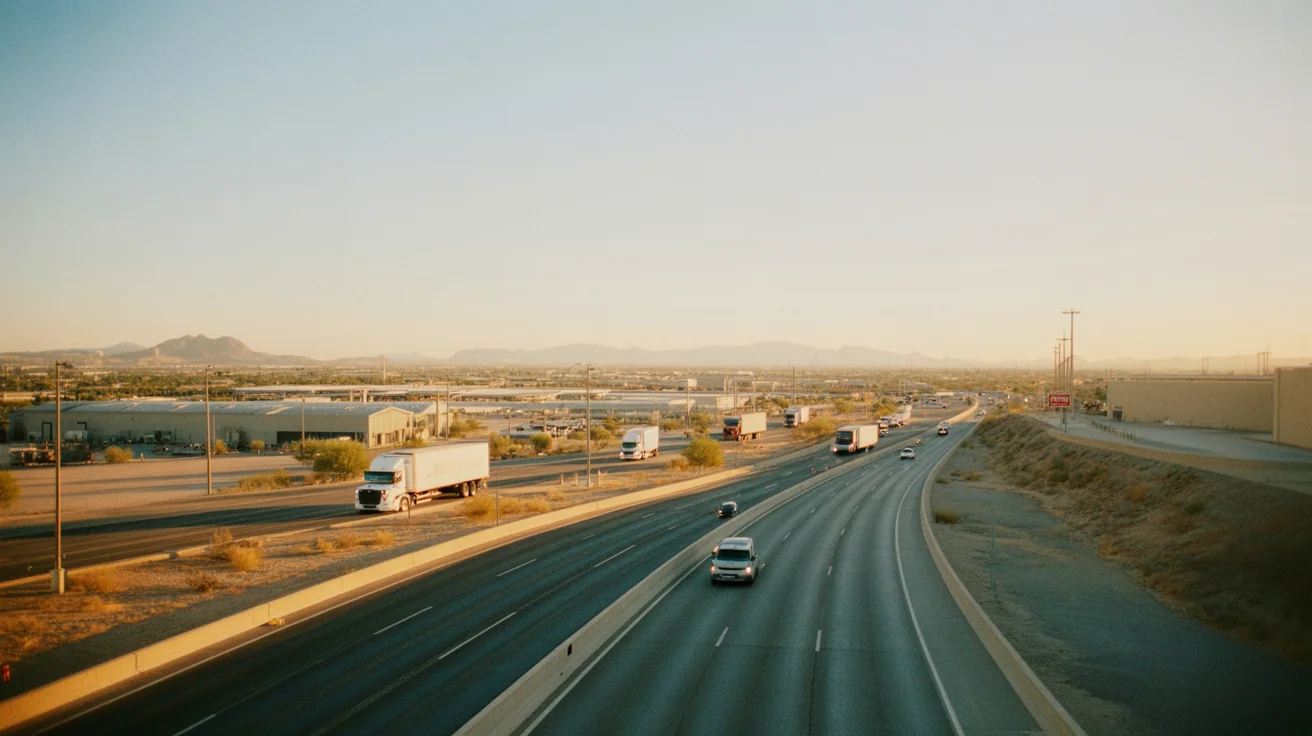
If you run a personal injury practice in Peoria, Glendale, Surprise, or anywhere along the northwest arc of the Valley, the corridor running through your market has changed underneath you over the last two years. Loop 303 — the outer beltway from I-17 west to I-10 — has gone from a sparsely traveled bypass to one of the most warehouse-dense industrial freight corridors in the Western US. The case volume implications are already visible in the SERPs. Most West Valley firms haven’t adjusted their SEO to match.
I’m not going to bury the lede. Northwest Valley PI search volume for freight-related queries — semi truck, commercial vehicle, delivery driver, warehouse-adjacent rear-end and merge crashes — is trending up materially. Meanwhile, the firms doing well in the local pack for “personal injury attorney peoria” or “car accident lawyer glendale” are mostly still optimized for the 2018 version of the West Valley, when the dominant query intent was residential auto.
The take: the firm in Peoria or Glendale that builds out commercial-vehicle and freight-specific landing pages in the next six months will own a search niche that the bigger downtown firms are too generalized to pursue and the smaller local firms haven’t seen yet. This is a window. It will close.
The development context — what changed along Loop 303
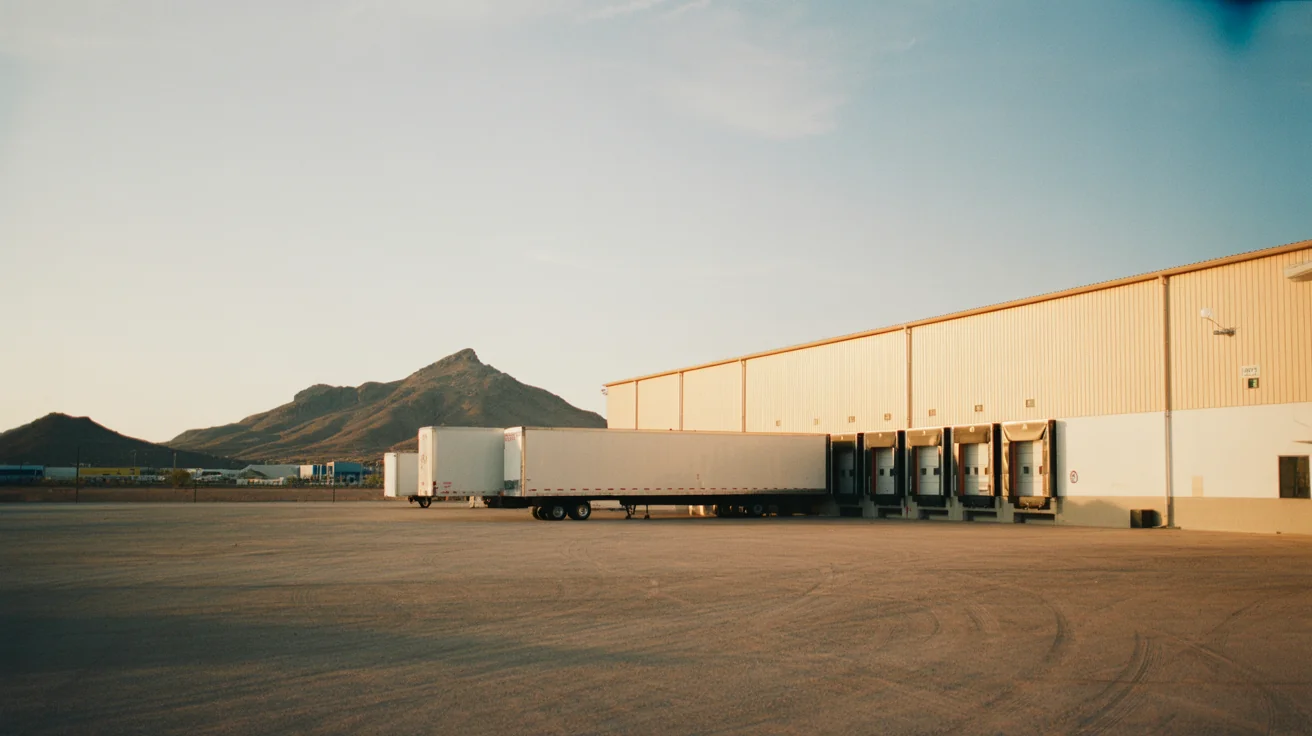
Quick context. Between 2023 and 2026 the corridor from Surprise down through Goodyear has absorbed massive industrial development. Microsoft’s data center campus in Goodyear. The TSMC ripple-effect pulling supplier facilities west. Big-box distribution centers — Walmart, Amazon, Target, several 3PLs — clustered along Northern Parkway and the 303/I-10 interchange. Residential growth in Surprise, north Peoria, and Buckeye to staff all of it.
Net effect on traffic: more freight trucks moving through distribution yards during shift changes. More long-haul commercial traffic using 303 to skip I-10 downtown. More commuter volume on Bell Road, Northern, and Olive Avenue feeding into the freeway. More merging conflicts at on-ramps that weren’t designed for current volume. MAG and ADOT count data through Q1 2026 shows truck volume on the 303 up roughly 40% since 2022. That’s the input. Now the output.
Why this specifically changes PI case volume
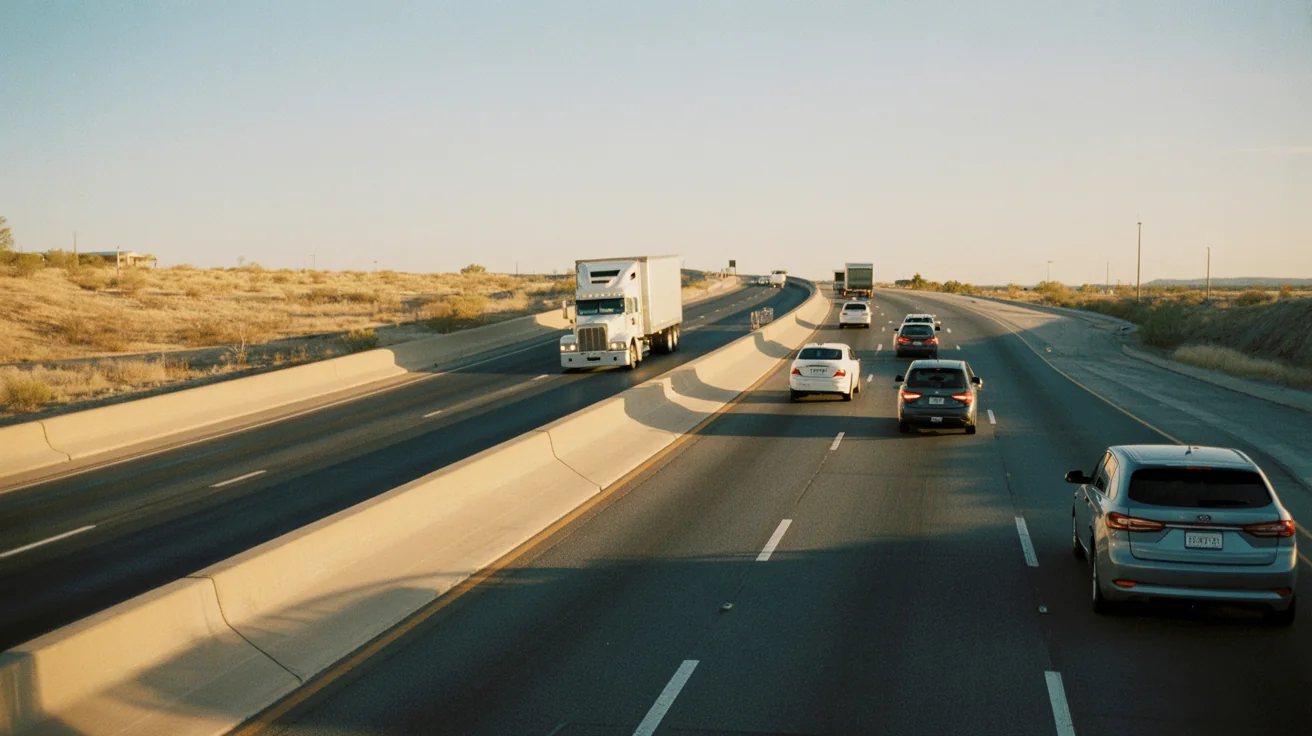
More freight + more commute traffic + more merge points = more crashes, and a different mix of crashes than the West Valley used to produce. The composition matters more than the raw count.
Pre-2023, the West Valley PI mix was overwhelmingly residential auto — rear-ends, retiree-driver collisions, occasional teen-driver incidents. Modest damages. Settlement ceilings limited by personal auto policy limits. Workmanlike economics — high volume, lower average value.
Post-2024, the share of commercial-vehicle and freight-involved crashes in the same geography has climbed noticeably. These are different cases. Commercial trucking has federal insurance minimums — $750K minimum for most interstate carriers, often higher in practice. The defendants have legal departments. Damages calculations involve cargo, lost-time-on-job for commercial drivers, sometimes wrongful death. Lower volume, much higher average value per case, longer cycles to settlement, more sophisticated litigation. Which means the SEO question changes too. The keywords that move cases for a Peoria firm in 2026 are not the keywords that moved cases in 2020.
The freeway changed. The case mix changed. Most West Valley PI sites are still ranking for the version of their market that existed five years ago.
Which West Valley cities benefit most — and where the SEO gap is widest
Cities sitting closest to the 303 corridor have the most upside. Peoria is the most obvious — directly on the corridor, residential density growing on both sides, and a manageable PI legal market (not as saturated as Phoenix proper). Glendale is the runner-up — slightly farther from the 303 but absorbs crossover volume from drivers using Northern Parkway and the 101. Surprise and Buckeye are growing too, but the legal market in both is thinner and the per-firm case volume is still building — worth a foothold if you’re already optimizing for Peoria, not a primary play in 2026.
The SEO gap is widest in Peoria, where the local pack is currently dominated by two firms running generic “personal injury attorney” optimization with no commercial-vehicle specificity. A firm willing to publish substantive pages on truck crashes, distribution-center liability, and commercial-driver incidents — with the right schema and a clean local signal — can push into that pack within two or three quarters. The bar is low because nobody else is trying.
The specific keyword and intent shifts to target
Stop optimizing only for “personal injury attorney peoria” and “car accident lawyer glendale.” Those queries still matter, but they’re saturated, and they’re not where the new volume is concentrated. The intent shifts I’d target on a West Valley PI site in 2026:
- Commercial vehicle and freight-specific queries. “Semi truck accident attorney peoria.” “Commercial vehicle crash lawyer glendale.” Lower absolute volume than residential auto, much higher case value per click.
- Loop 303-specific local intent. “Loop 303 accident attorney,” “303 crash lawyer.” Low volume, high specificity, almost no current optimization. Whoever ranks owns a small but valuable slice.
- Distribution-center and warehouse-adjacent injury queries. Third-party liability claims involving delivery trucks, parking-lot crashes on commercial property. Adjacent to workers’ comp but distinct — these third-party claims are pure PI.
- Commute-hour merge-crash queries. Bell Road, Northern Parkway, the 101/303 interchange. Where prospect searches happen post-crash, with almost no specific optimization because the queries feel too narrow.
The pattern: more specific, more local, more rooted in what’s happening on the ground than what’s in a generic keyword tool’s PI list.
What a Peoria or Glendale firm should actually do
Concretely, if I’m advising a West Valley PI firm in the next six months:
- Build a dedicated commercial-vehicle / truck-crash practice page — separate from the general PI page, top-level in the nav, not buried. Cover federal trucking regulations, owner-operator vs. carrier liability, cargo-related complications, and the firm’s actual experience with these cases.
- Layer Loop 303 and corridor-specific content underneath. Not as a vanity location grab — as substantive context on why corridor crashes differ from city-street crashes, which carriers tend to be involved, and what investigative steps matter.
- Update the Peoria and Glendale city pages to reflect the actual case mix today, not the 2019 version. Mention the corridor. Mention the distribution clusters. Specificity to the current market is what makes a city page rank.
- Clean up the GBP categorization. Add secondary categories (truck accident, commercial vehicle, motor vehicle accident) where applicable. Update service areas to specifically include the freeway corridor cities.
The broader strategy for smaller West Valley firms competing against bigger downtown shops is on competing with bigger firms locally. The practice-page structure that actually ranks for PI lives on the personal injury SEO page, with a Peoria-specific cut on the Peoria PI page.
The Loop 303 corridor is a once-a-decade local market shift. Most bigger downtown agencies are still optimizing their downtown clients for downtown queries. The West Valley firm that moves now is buying ranking real estate at a discount it won’t see again.
— The owner, PHX Search Co.