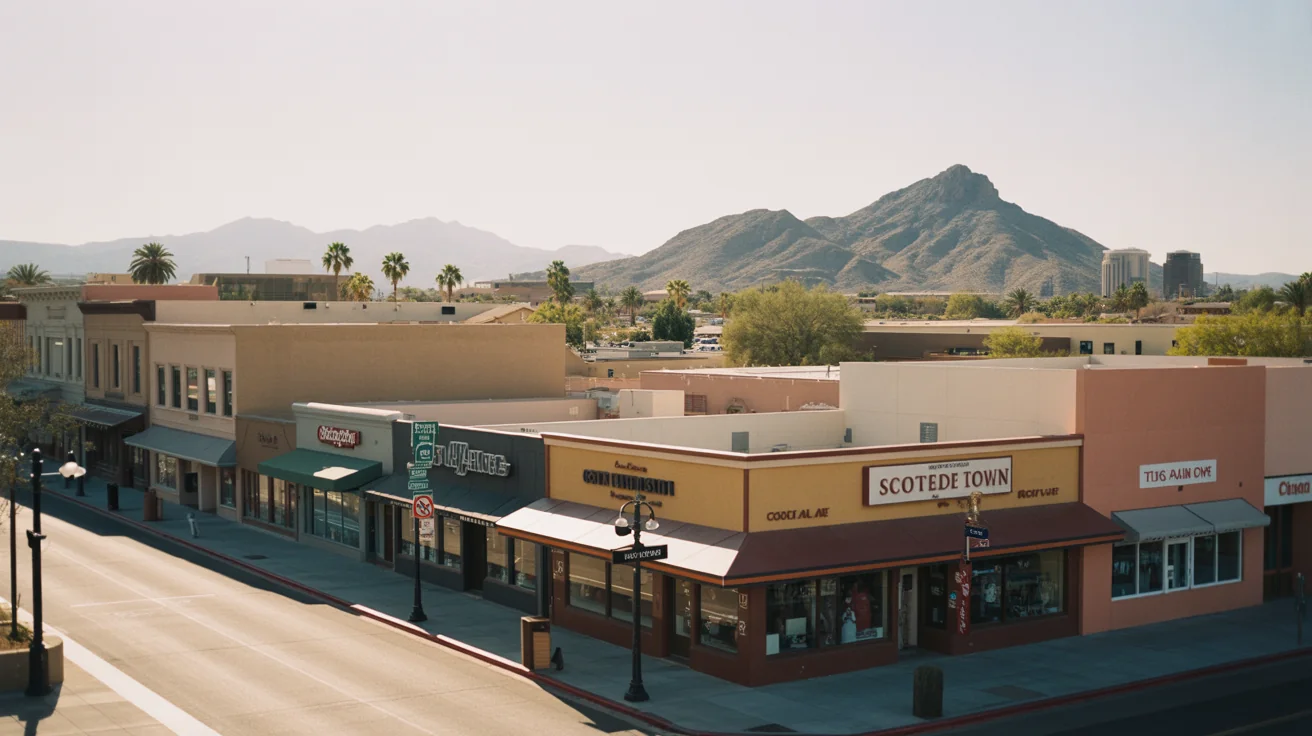
Scottsdale’s Old Town zoning shift — the denser mixed-use overlay, the modified height envelopes, the ground-floor commercial requirement that came with it — isn’t a real-estate story for law firms with storefronts here. It’s a search story. The character of who walks past your door, who searches for you from one block away, and who Google thinks belongs in the Old Town local pack is about to move. If you’ve got a ground-floor office between Indian School and 5th Avenue, you have a narrow window to position before the new mix of neighbors decides the answer for you.
I’ve watched this play out in slower-motion in Tempe and around the LRT corridor. When a small commercial district gets rezoned for denser mixed-use, search behavior lags the construction by twelve to eighteen months and then shifts hard. New residents move in. New ground-floor businesses replace the old tenants. The intent profile for any location-sensitive query — and “lawyer near me” is intensely location-sensitive — drifts toward whoever is now there. Old Town will do this faster than most, because the density was already there. What’s new is the kind of tenant the rezone invites — restaurants and boutique retail on ground floors that used to be law offices — and that mix changes who Google thinks the neighborhood is for.
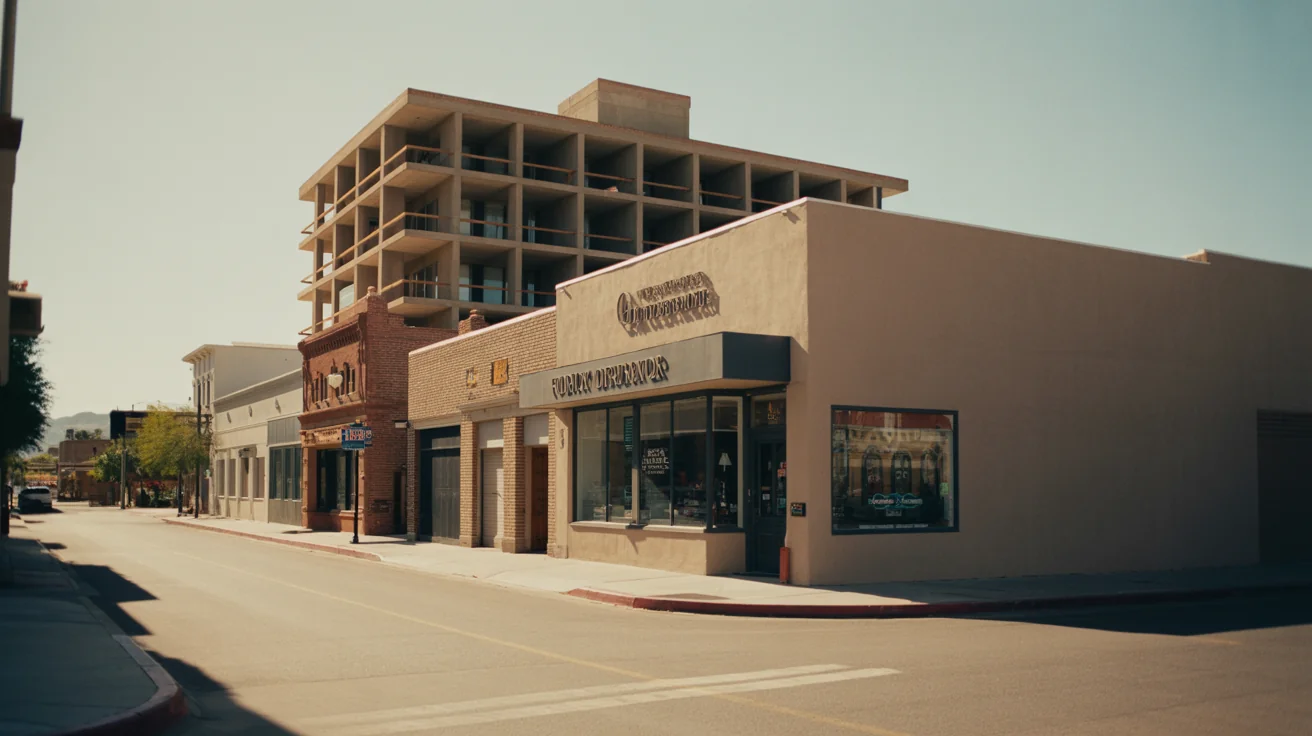
What the zoning change actually does to a ground-floor law firm
Three things happen, in order. Rent on your storefront goes up — sometimes immediately, sometimes a year out when the landlord sees what the new restaurant down the block is paying. Foot traffic past your door changes character. The lunch-and-cocktail crowd from a denser Old Town isn’t your client — but they are the people Google now associates with the neighborhood. And your street presence, which used to be a quiet asset, becomes either a brand moment or a liability, because suddenly more people are walking past forming an impression in three seconds.
The rent piece is the conversation every Old Town firm owner is already having. I’ll skip it — your commercial broker knows your block better than I do. The part that’s invisible until it’s a problem is what happens to your local search visibility when the rest of the block becomes a restaurant row.
Google’s local pack weighs three things — relevance, proximity, prominence. Proximity is fixed by your address. Relevance you control through your site and your GBP. Prominence is where the zoning change quietly bites. It’s partly informed by the cluster of businesses around you — the citation graph, the cross-references in directories, the implicit category of the neighborhood. When the implicit category of Old Town shifts from “professional services district” toward “mixed-use destination,” ground-floor law firms have to work harder to keep their prominence signal pointed at “lawyer” rather than getting absorbed into the noise.
The SEO twist nobody is talking about
Search intent for legal queries in Old Town is going to bifurcate. The residents moving into the new mixed-use buildings are a different demographic than the day-population that historically searched for Old Town lawyers — younger on average, higher willingness to search on a phone while walking, more likely to base the decision on the first three Google results and a 30-second scan of the firm’s site. That demographic isn’t bad for law firms. It’s just different. The firms that ranked well for the old Old Town searcher are not automatically the firms that will rank for the new one.
The bigger twist is what happens to “lawyer near me” intent when the searcher is standing on 5th Avenue at 7pm. Today, that searcher is probably a visitor or a resident who needs help and is trying their phone. A year from now, the same searcher in the same spot is more likely to be a new resident from the building above, with a different practice-area need profile — more family law, more estate planning for younger high-earners, fewer of the volume-PI queries that already skew away from Scottsdale anyway. If your firm’s site and GBP are tuned for the old practice mix, you’ll watch the new mix go to whoever rebrands for it first.
When a neighborhood is rezoned, the businesses that win the next decade aren’t the ones with the best address. They’re the ones that update their search presence before the new neighbors decide what kind of district Old Town is going to be.
The local pack itself will recompose. Some firms currently ranking got there partly on a citation graph built when the neighborhood was a quieter professional district. As new commercial tenants generate their own citation activity — Yelp reviews, restaurant directories, retail aggregators — the relative signal weight shifts. Firms that haven’t refreshed their GBP, citation profile, or on-page Scottsdale signals in two years will drift. Firms that update now will be the ones Google leans on as the authoritative legal tenants of the new Old Town.
What an Old Town firm should do in the next ninety days
One — re-narrow the GBP primary category. Most Old Town firms I audit are categorized too broadly. If you’re a personal injury firm, primary should be “Personal injury attorney,” not “Lawyer.” If family law, “Family law attorney” — and ideally with the secondary categories pruned, not piled. The denser the local commerce around you gets, the more Google leans on category precision to decide who belongs in which local pack. More on GBP for law firms here.
Two — rewrite the Old Town-specific neighborhood signal on your practice pages. If your Scottsdale personal injury page or Scottsdale family law page says “we serve Scottsdale” once at the top and never mentions Old Town, 5th Avenue, or the actual blocks you serve, you’re leaving the neighborhood signal on the table. The fix isn’t to keyword-stuff. It’s to write like someone who actually works there.
Three — get review velocity to a steady drip. The absolute number matters less than the last-90-days count. 80 lifetime reviews and three in the last quarter looks worse than 35 and seven. More on competing with bigger firms locally here.
Four — audit your street-level brand against the new neighbors. If your storefront is next to a new restaurant pulling 200 dinners a night, the people walking past form a brand impression that determines whether they remember you when they Google “lawyer Scottsdale” three weeks later. The street view of your office is also literally in Google’s index. A storefront last refreshed in 2012 is now a signal — to humans and to Google’s prominence calculation.
Old Town is about to become a market where smaller firms either get squeezed out and absorbed into the noise, or use the moment to reset their search presence and own the new local pack outright. The firms that win this transition won’t be the biggest — they’ll be the ones that did this work before the construction finished and the citation graph locked in around new tenants. The canonical Scottsdale page walks through the broader playbook, and a free one-page audit will tell you exactly what to fix in the next ninety days.
— The owner, PHX Search Co.