
Tempe spent the last eighteen months rewriting how e-scooters operate inside city limits — Bird and Lime back on the streets under a new permit framework, ASU-area incident reporting handed off to a city dashboard, and a series of liability shifts that move risk from the rider onto the operator (and, in the right fact pattern, onto third parties). The resulting search behavior is a real PI sub-practice forming in real time. And almost nobody in this market is building content for it.
I’ve been tracking the keyword landscape for “scooter accident” queries in the Tempe DMA for six months. The picture is consistent: rising query volume, almost no Tempe-specific firm content, top results dominated by national PI directories and out-of-state firm blog posts. Whichever Tempe PI firm takes this seriously can own the niche by the end of 2026 with maybe twelve well-built pages.
Here’s the position, stated plainly: this is the cleanest sub-practice content opportunity I’ve seen in the East Valley in two years. The regulatory ground is shifting, search behavior is reacting, and the competitive set is asleep. A firm that commits twelve weeks of focused content can build a moat that takes a competitor a year to dent.
The regulatory context, in plain English
Three pieces of what changed, because each creates a different fact pattern prospective clients will be searching around.
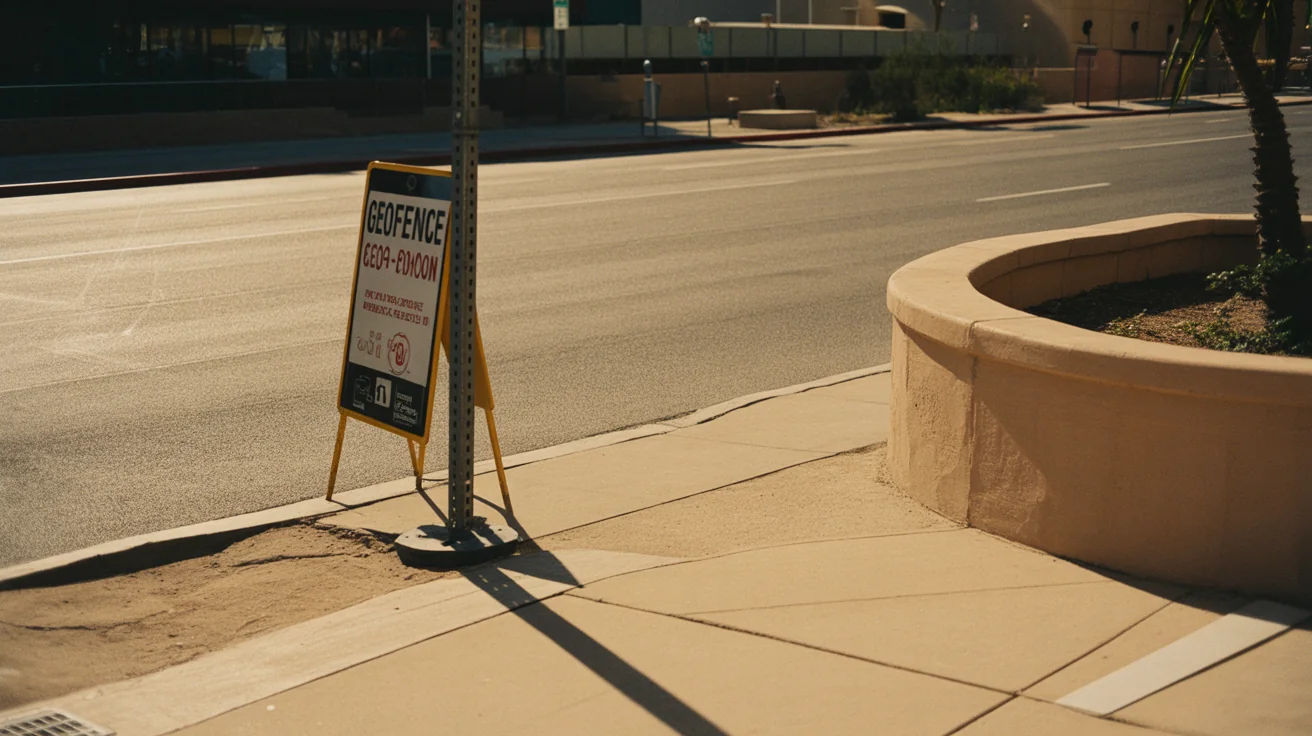
The new permit framework. Tempe re-permitted Bird and Lime under a refreshed agreement: geofenced no-ride and slow-ride zones around ASU, operator-side insurance minimums, and a publicly accessible incident log. The contract creates specific operator duties — duties that, when breached, become the foundation of a claim against the operator rather than only the rider.
The ASU-area incident dashboard. The city stood up a coordinated incident-reporting dashboard for the ASU corridor — Mill Avenue, University Drive, Apache Boulevard — capturing crashes, near-misses, and pedestrian conflicts. Partially public. For a PI lawyer, that’s content gold: cite current local conditions without speculating.
The liability shifts. Recent Arizona appellate guidance clarified that operator negligence — failure to maintain, enforce geofences, or act on prior incident reports at a specific location — can sustain a claim against the operator independent of rider fault. Moves Arizona from a state where these cases were marginal to one where they’re routinely viable on the right facts.

The buyer’s search behavior — specific query patterns being generated
Sub-practices form in a recognizable arc. First, broad informational queries (“are scooters safe in Tempe”). Then fault-and-liability queries (“who’s at fault scooter accident Arizona”). Then transactional queries that signal a real prospect (“scooter accident lawyer Tempe,” “Bird scooter accident attorney Phoenix”). All three layers are showing up right now, transactional growing fastest.
Representative samples of what prospects are typing into Google in this market:
-
Informational: “Tempe e-scooter rules 2026,” “do scooters have insurance Arizona”
Fault analysis: “scooter hit by car Tempe whose fault,” “Bird scooter malfunction injury Arizona”
Transactional: “scooter accident lawyer Tempe,” “Lime scooter accident claim Phoenix”
Specific facts: “scooter accident in geofence zone,” “scooter accident on Mill Avenue”
Volume on the transactional and specific-fact queries isn’t enormous — dozens to low hundreds of monthly searches per query. But the intent is razor-sharp and the conversion rate from those queries in a market with almost no firm competing for them is extraordinary by PI standards.

The competitive landscape — essentially open
I pulled SERPs on the top twenty Tempe scooter-injury queries last month. What’s sitting in the top ten: national PI directory listings (Avvo, FindLaw aggregator pages), generic Phoenix PI firm blog posts that mention scooters in one paragraph of a broader “types of accidents we handle” page, a Wikipedia micromobility article, and an out-of-state firm’s Texas page that ranks because Google has nothing better for the Tempe-specific results.
Not a single Tempe-based PI firm has a dedicated e-scooter injury practice page. Not one. The handful of Phoenix firms with any content on the topic have a single thin blog post each — none referencing the new Tempe permit framework, the incident dashboard, or the operator-liability shift.
A PI keyword landscape with rising buyer intent and zero local firm competition is a once-every-three-years opportunity. The firm that builds the right twelve pages owns this niche through 2027.

The content strategy for a firm wanting to own this niche
Not a “publish twenty blog posts and pray” play. The static authority that wins this niche looks like a tight sub-practice page set supported by a small number of geo-tagged answer pages and one citation-worthy reference page. Twelve pages, maybe fifteen.
The anchor practice page. One substantive “Tempe e-scooter injury attorney” page — Tempe-specific, not “Phoenix scooter accidents.” This is the page that has to do the heavy conversion lift. The build template is on anatomy of a ranking practice page.
The sub-practice scaffold. Scooter injury doesn’t sit cleanly under generic PI the way auto-collision does — the fact patterns, defendants, insurance posture, and discovery look different enough to deserve its own treatment. This is exactly the case for the practice area vs sub-practice strategy conversation: parent PI page, scooter sub-practice page underneath with its own architecture.
The answer set. Six to eight focused answer pages covering the fault-and-liability queries. “Who is liable in a Tempe e-scooter accident?” “What insurance covers a Bird scooter injury in Arizona?” Each 700–1,200 words, direct answer in the first paragraph, links up into the anchor page. The long-tail layer that feeds the conversion layer.
The reference page. One in-depth resource — “The Tempe Scooter Safety and Liability Guide” — covering the regulatory framework, dashboard, operator obligations, and rider’s rights, in plain English. The page that earns citations from local news, ASU student journalism, and other firms. The moat-builder.
Twelve to fifteen pages, built over an eight-to-twelve-week sprint, supported by the firm’s personal injury SEO foundation and Tempe PI geo-page.

ABA considerations for niche-specific marketing
Niche content carries Rule 7.1 considerations worth thinking about before publishing, not after.
Don’t overstate the law’s certainty. The Arizona appellate guidance on operator liability is real but new. Practice pages should describe the doctrine accurately without implying every scooter case is a slam dunk. “May,” “depending on the facts,” “in some cases” — accurate, not weasel words, and they keep the firm clear of misleading-advertising challenges.
Don’t imply association with ASU or the city. A page titled “ASU Scooter Injury Lawyer” can implicate Rule 7.5 or Rule 7.1 if a reader could reasonably infer an official relationship. “Lawyer for scooter injuries in the ASU area” is fine. “ASU’s go-to scooter attorney” is not. The line gets crossed all the time by firms in a hurry.

What to do this quarter if you’re the firm
If you’re a Tempe PI firm and you read this far, you know what to do. Anchor page first. Sub-practice scaffold by week four. Answer set live by week eight. Reference guide by week twelve, then pitch it to local news outlets as a citation source.
The window isn’t permanent. Once one or two firms build real content, the competitive set wakes up and the cost of entry goes up substantially. Right now it’s empty. Six months from now it probably isn’t.
Broader Tempe context is on the Tempe geo page. If you want to talk through whether your firm is the one to build this — or whether your practice page set is ready to anchor a niche move like this — that’s the conversation worth having.
— The owner, PHX Search Co.